Asian Hornet Identification
Learn to identify Vespa velutina and distinguish it from native species
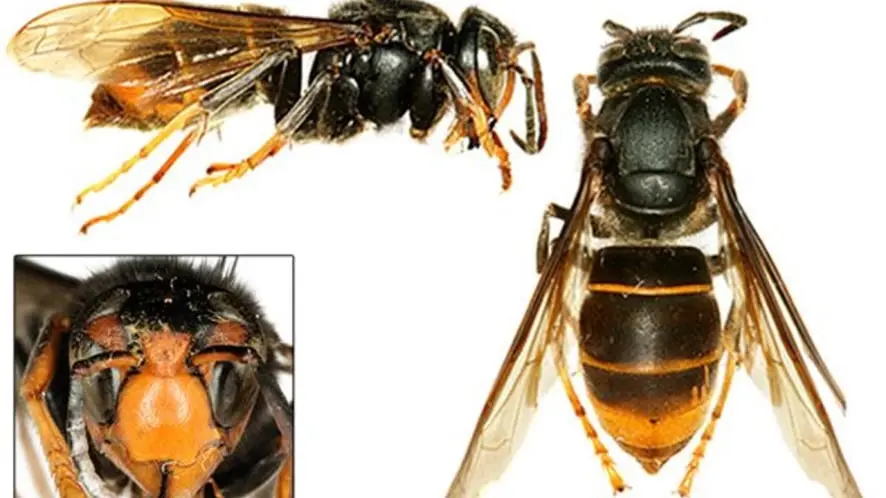
Asian Hornet (Vespa velutina) - Key identification features from multiple angles
Key Identification Features
What does it look like?
- • Slim wasp shape
- • Smaller than European hornet
- - Queen ca. 3cm
- - Worker ca. 2.5cm
- • Dark brown/black thorax with no stripes
- • Lower legs yellow
- • Single yellow stripe on abdomen (4th segment)
- • Orange-yellow face
Size & Build
- • Workers: 17-26mm in length
- • Queens: Up to 30mm in length
- • Robust build with distinctive narrow waist
- • Strong, powerful flight capability
Coloration
- • Predominantly dark brown to black body
- • Yellow/orange legs with dark tips
- • Yellow band on 4th abdominal segment
- • Dark thorax with fine yellow markings
- • Orange face with black markings
Head Features
- • Orange face from front view
- • Dark vertex (top of head)
- • Large, prominent compound eyes
- • Strong mandibles for hunting
Behavior & Habitat
Typical Behavior
- • Active predators of honeybees and other insects
- • Often seen hovering outside beehives
- • Aggressive when defending nests
- • Most active during warm, sunny days
Preferred Habitats
- • Tree canopies (often 10+ meters high)
- • Building eaves and sheltered locations
- • Areas near water sources
- • Gardens with flowering plants
Comparison with Native Species
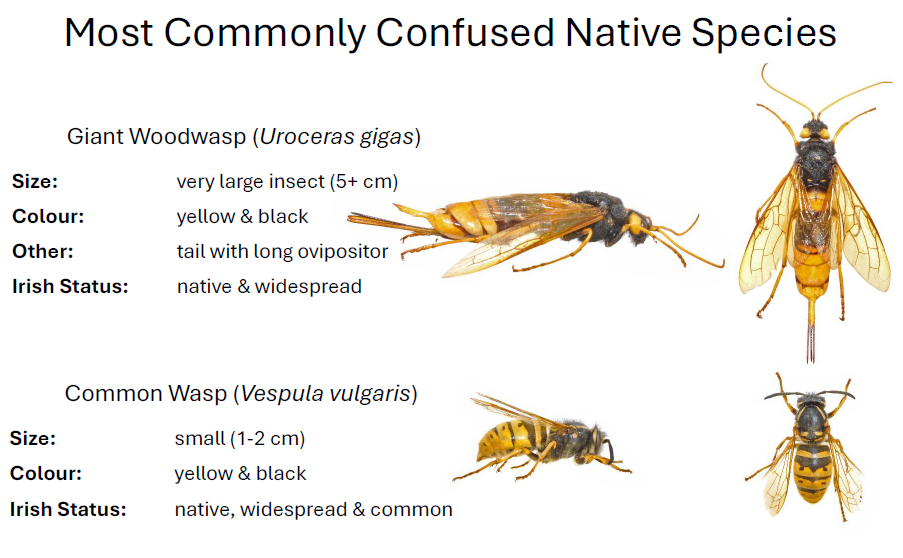
| Feature | Asian Hornet | Giant Woodwasp | Common Wasp |
|---|---|---|---|
| Size | 17-30mm | 25-40mm | 11-18mm |
| Thorax | Dark brown/black | Black with yellow markings | Black with yellow stripes |
| Abdomen | Dark with yellow band | Black with yellow bands | Bright yellow with black bands |
| Legs | Yellow with dark tips | Yellow/orange | Yellow |
| Body Type | Robust wasp shape | Elongated, cylindrical | Typical wasp waist |
Quick Action
Think you've spotted an Asian hornet? Report it immediately.
Report Sighting Learn About LifecycleDistribution
Origin:
Southeast Asia, China
First EU Detection:
France, 2004
Current Range:
France, Spain, Portugal, Belgium, Netherlands, Germany, Italy
Seasonal Activity
Spring (Mar-May)
Queens emerge
Summer (Jun-Aug)
Colony growth
Autumn (Sep-Nov)
Peak activity
Winter (Dec-Feb)
Dormancy